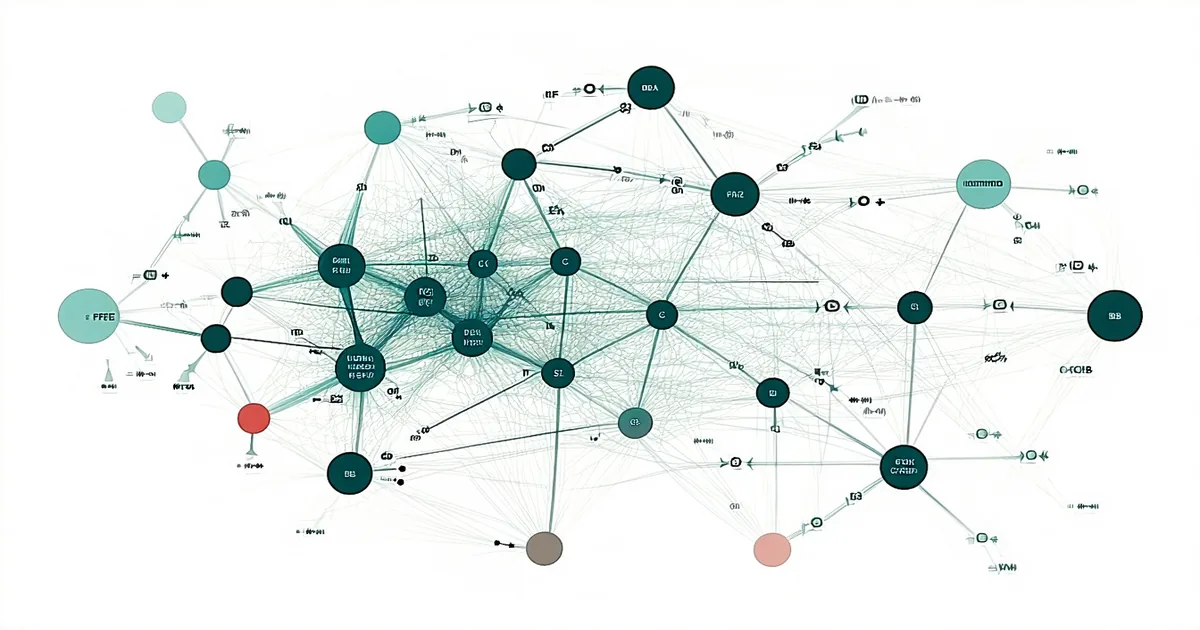
Polyketides represent one of the most structurally complex families of natural products accessible through microbial biosynthesis — and one of the most instructive for thinking about chassis design. The biosynthetic gene clusters involved are large, the intermediates are tightly channeled, and the relationship between precursor availability and final titer is often nonlinear in ways that punish naive approaches. Much of what I'll describe here reflects methodology our team developed through earlier research on polyketide-producing chassis; the specific observations belong to general approaches in the field, not to any particular partner program.
Why flux analysis has to come before pathway installation
The most common error in heterologous pathway projects — one I've watched repeated across graduate programs, industrial biotech groups, and early-stage startups — is treating the chassis as a passive recipient of a new genetic program. Teams design pathways in silico, verify that the enzymes are functional in vitro or in a model organism, and then install the full cluster into their production strain expecting the metabolic logic to hold. It often doesn't, and the reason is usually that nobody systematically measured the host's metabolic flux before beginning.
Carbon-13 metabolic flux analysis (¹³C-MFA) gives you the most direct picture of how carbon is actually moving through a cell's metabolic network under your conditions. The experiment is conceptually simple: feed cells isotopically labeled substrate (typically U-¹³C₆-glucose or 1-¹³C₁-glucose, depending on which network nodes you want to resolve), then measure the isotopologue distribution of downstream metabolites using GC-MS or LC-MS, and use that distribution to constrain a metabolic model that infers the actual flux through each pathway branch. The resolution you get from this is genuinely different from enzyme activity measurements or transcriptomic data — it's the integrated outcome of all the regulation, kinetics, and competing reactions operating simultaneously in the living cell.
For polyketide chassis work specifically, ¹³C-MFA is indispensable for quantifying malonyl-CoA availability. Malonyl-CoA is the two-carbon extender unit for most type I and type II PKS pathways, and its intracellular pool is subject to intense competition: fatty acid synthase (FabB/FabF in E. coli) draws heavily on malonyl-CoA during exponential growth, and the pool turns over on a timescale of seconds to minutes. Standard metabolomics gives you a snapshot of pool size; ¹³C-MFA gives you turnover rate, which is what actually determines whether your PKS will be carbon-limited under production conditions.
Flux balance analysis as a design tool — and its honest limitations
Flux balance analysis (FBA) and its extension flux variability analysis (FVA) operate on a fundamentally different level from ¹³C-MFA. Rather than measuring what fluxes actually are, FBA predicts what they could be given a stoichiometric model of metabolism, an objective function (typically growth rate or product yield), and the constraint that all metabolites must be at steady state. The COBRA Toolbox, the BiGG database of metabolic reconstructions, and more recently the KBase framework have made genome-scale FBA models accessible for E. coli, B. subtilis, S. cerevisiae, and a growing number of industrially relevant organisms.
FBA is most useful in the design phase, before any bench work begins. Running FVA against your target pathway helps identify which flux routes are thermodynamically and stoichiometrically feasible, which competing reactions directly reduce product yield, and where the theoretical maximum titer lies given the host's network topology. We use it routinely at Chassiscell as a screening tool for chassis selection: given a target compound and a candidate chassis genome, can an FBA model identify knockouts that increase flux to the precursor pool without violating growth constraints? If the model suggests a particular deletion is lethal, that's worth knowing before you schedule the Cas9 experiment.
That said, FBA has real limitations that are worth stating plainly. The models are incomplete — regulatory constraints, allosteric effects, and enzyme kinetics are all absent from the standard stoichiometric framework. FBA will tell you that a particular flux distribution is stoichiometrically feasible; it won't tell you whether the cell can actually achieve it given its regulatory architecture. We've seen cases where FBA predicts a 3-fold improvement in precursor availability from a specific gene deletion, and the measured ¹³C-MFA result shows maybe 1.2-fold — the model was right that flux redistribution was possible, but substantially overestimated the magnitude. We're not saying FBA is misleading; we're saying it's a hypothesis generator, not a replacement for measurement.
Push-pull-block: the strategy and where it fails
The push-pull-block framework for metabolic pathway optimization has been in the literature since at least the mid-2000s (Fowler et al. described aspects of it for flavonoid production in 2009), and it remains the most useful high-level mental model for thinking about flux redirection. Push: increase the supply of precursors feeding your target pathway. Pull: enhance the expression or activity of the first committed step in the pathway to create downstream demand. Block: reduce or eliminate competing reactions that siphon away precursors or intermediates.
For malonyl-CoA-dependent pathways in E. coli, classic push interventions include overexpression of ACC (acetyl-CoA carboxylase, the enzyme that converts acetyl-CoA to malonyl-CoA), combined with deletion of fadD to block fatty acid degradation and weak expression modifications to fabB or fabF to reduce competing malonyl-CoA consumption. The pull side typically involves using a first-step enzyme with high affinity for malonyl-CoA as the driver of flux into the pathway. Block interventions in this context often target brnQ, fapR (in B. subtilis), or similar regulators that sense and respond to fatty acid availability.
Where push-pull-block routinely fails is in ignoring the metabolic burden imposed by the heterologous pathway itself. Installing a large PKS cluster — which can involve modules encoding ketosynthase, acyltransferase, dehydratase, enoylreductase, ketoreductase, and thioesterase domains — places a substantial translational and energetic load on the cell. Ribosome allocation shifts; the pool of charged tRNAs relevant to PKS-codon-heavy sequences can be depleted under high expression conditions; the cells often begin partitioning more flux into stress-response metabolism as a consequence. In our early characterization runs, we observed that strains carrying high-copy PKS constructs frequently showed reduced growth rates that were not accounted for in any of the FBA models, and that the metabolic flux phenotype measured by ¹³C-MFA changed substantially between uninduced and induced states. The chassis needs to be characterized in the induced, burdened state — not just in the baseline state — to give accurate predictions of production-condition performance.
Cofactor balancing: the NADPH/NADH problem
Most reduction steps in polyketide and terpenoid biosynthesis are NADPH-dependent, and this creates a stoichiometric challenge in E. coli that is not trivial to resolve. The cell's primary NADPH generation route under aerobic, glucose-limited conditions runs through the pentose phosphate pathway (glucose-6-phosphate dehydrogenase and 6-phosphogluconate dehydrogenase), supplemented by the NADPH-generating transhydrogenase (UdhA/PntAB). The two transhydrogenases in E. coli operate in opposite directions energetically, and under typical production conditions the cell is not running the phosphate pathway at maximum flux — it's running at whatever rate balances anabolic NADPH demand with the biosynthetic load from growth itself.
Adding a NADPH-intensive heterologous pathway tips that balance. Teams often respond by overexpressing the pentose phosphate pathway enzymes (Zwf, Gnd) or by switching to a carbon source like gluconate that feeds directly into 6-phosphogluconate. Another approach, elegantly applied by the Zhao group and others, is to engineer transhydrogenase flux directly — using PntAB overexpression to drive NADH to NADPH conversion using the proton gradient as energy input. A more radical option is to engineer the relevant reductase domains of the pathway itself to accept NADH instead of NADPH, which requires protein engineering work but eliminates the supply-side constraint entirely.
None of these approaches is universally superior; the right choice depends on what the ¹³C-MFA says about where the cell's reductant balance actually sits under your conditions. Auxotroph rescue strategies — engineering the chassis to require a provided metabolite that is stoichiometrically coupled to cofactor regeneration — offer another lever, particularly useful for pathways where you need the cell to operate at low growth rates that would otherwise limit carbon flux into the production pathway.
What this means for chassis design practice
The lesson from polyketide chassis work, applied broadly, is that metabolic engineering for a specific pathway class is not separable from chassis characterization. The chassis needs to be characterized with the pathway's requirements in mind: precursor pool dynamics, cofactor balance, burden tolerance, and genetic stability under production conditions. A chassis delivered with only baseline growth and genetics data is missing the information that matters most for a biosynthesis program.
This is why we believe the chassis development conversation has to start with the target compound and work backwards. What are the precursor requirements? What cofactors are consumed? What is the expected expression burden of the BGC? Those questions determine which chassis background is appropriate, which deletions or modifications are worth making, and what the characterization data package should measure. The chassis is not separate from the pathway program — it is the program's first engineering problem.