When people ask why we chose Boston for Chassiscell, the short answer is that we didn't really choose — Boston was where the people were, and people are what early-stage companies run on. But the longer answer is more interesting, and I think it speaks to something specific about what a chassis platform company needs from its environment that a Bay Area or Research Triangle location would supply differently.
I've been working in biotech research labs in this city for several years, and I've spent a lot of that time thinking about what makes certain research environments productive in ways that transcend any individual lab's output. Boston has something that I'd describe as research density: not just a high concentration of institutions, but a high concentration of adjacent, partially-overlapping communities that have been interacting long enough to develop informal knowledge transfer channels that don't appear in any org chart.
The Kendall Square effect and what it actually means
Kendall Square in Cambridge gets written about constantly as a model of biotech cluster formation, usually in a way that emphasizes the physical proximity of MIT, the Broad Institute, the Whitehead Institute for Biomedical Research (WIBR), and the large pharma and biotech campuses that moved in over the past two decades. The proximity argument is real but often overstated. Physical proximity matters less than it once did for literature access and computational collaboration.
What proximity actually delivers in Kendall Square is informal access to tacit knowledge — the kind that doesn't get published. A researcher working on metabolic flux analysis at a growing biotech company knows, through conversations at seminars and corridor intersections, which characterization approaches are producing usable data in actual production programs and which are producing publishable papers about approaches that don't scale. That informal knowledge channel runs faster than the publication cycle by years. For a company like Chassiscell, where the core technical question is "what characterization methodology is actually sufficient for a partner program?" rather than "what is the biological mechanism?", that informal channel is extremely valuable.
The spin-out culture from MIT and the Broad has also shaped the Boston ecosystem in ways that affect early-stage company formation. Both institutions have developed tech transfer and incubation infrastructure that substantially reduces the friction of moving research from a lab bench to an independent company — and more importantly, both have developed alumni networks dense enough that an early-stage founder can find advisors who have gone through the same transition recently enough for the advice to be current. That's not unique to Boston, but the density of recent spin-outs in synthetic biology and metabolic engineering specifically means the relevant network is unusually populated here.
The Albany Street corridor and why it matters to us
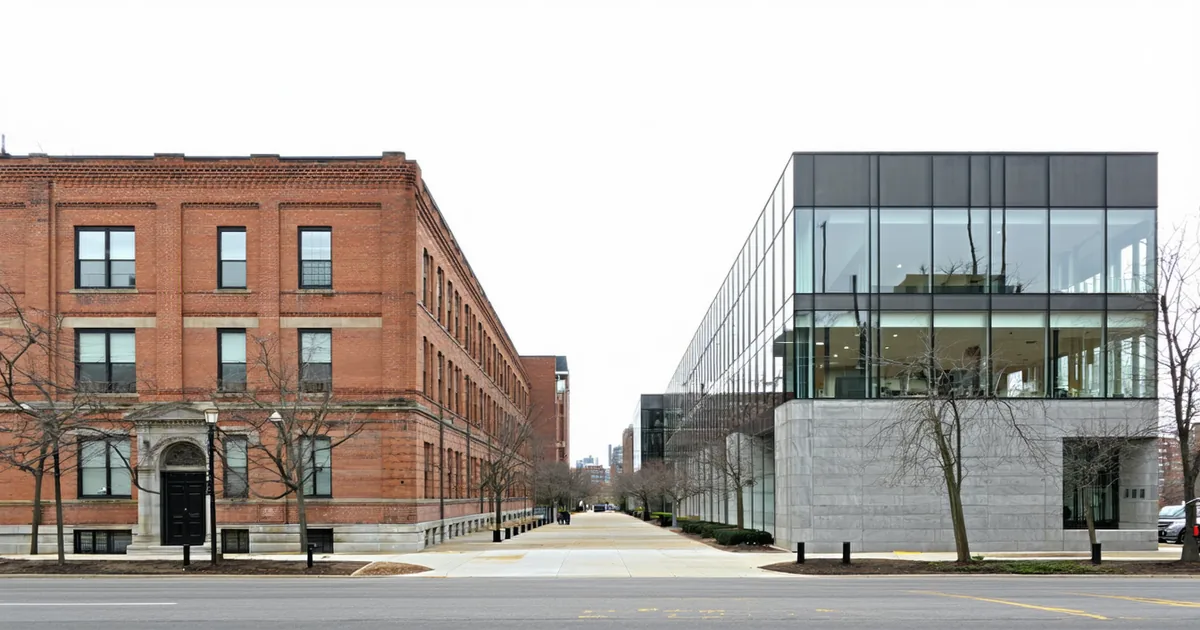
Chassiscell is located at 650 Albany Street in the Boston University Medical Campus area, not in Kendall Square. This is sometimes surprising to people who assume all Boston biotech is concentrated in Cambridge, but the Albany Street corridor serves a specific function in the ecosystem that is different from what Kendall Square offers.
The BU Medical campus and the Longwood Medical Area — which includes the cluster of hospitals and research institutes along Longwood Avenue — represent a different kind of density than Kendall. It's concentrated around clinical translation, therapeutic development, and the interface between basic research and medicine. For a company building chassis for pharmaceutical and biotech programs, that proximity is meaningful: the conversations we can have here, with researchers thinking concretely about biosynthesis in a therapeutic context, are shaped by a different set of constraints than the conversations typical of a pure-tech cluster.
LabCentral — with its main facility in Kendall Square and the BioLabs Boston location on the South End edge — has also done important structural work for the early-stage ecosystem by providing shared lab infrastructure with genuine quality. Early-stage biotech has historically struggled with the capital barrier of setting up independent lab space in a city with Boston's commercial real estate costs. Shared facility models lower that barrier and, more usefully, create physical communities of early-stage companies that generate their own informal knowledge exchange. We've found that proximity to other very early-stage biology companies — companies working on adjacent problems with different tools — generates more useful thinking per conversation than many formal technical discussions.
What Boston doesn't give you
It would be dishonest to write about Boston as an early-stage synbio location without acknowledging what it doesn't offer. The cost of operating here is significant — lab space, talent costs, and the cost of living that shapes what compensation packages need to look like. The Bay Area has advantages in deep-tech hardware and the culture of software-hardware integration that is increasingly relevant as biological engineering tools grow more instrument-dependent. The Research Triangle has laboratory cost structures that make certain experiments economically viable there that would require more careful prioritization here.
The Massachusetts BioCouncil (MassBio) provides policy advocacy and connections to the regulatory environment that matters for eventual therapeutic programs, but the regulatory proximity argument is often overstated for early-stage R&D companies; the FDA's actual offices aren't in Cambridge, and the early technical decisions we're making about chassis design are not meaningfully shaped by being in the same time zone as the Silver Spring campus.
The honest version of why Boston is right for Chassiscell is specific to what we're building, at this stage, with this team. We have deep roots in the Boston academic-biotech research community. Our scientific advisor and our network of informal advisors are concentrated here. The pharma and growing biotech R&D groups we're building our partner program for are heavily represented in this corridor. For a company at our stage, with our specific technical focus, those factors outweigh the cost disadvantages. A different company at a different stage would weigh those tradeoffs differently, and that would be the right answer for them.
The ecosystem we want to build within
Being in Boston also means existing within a set of professional norms that I think are worth naming. Boston biotech — the community of researchers and company-builders who have spent careers here — has a culture that values scientific rigor in a way that occasionally resists hype. There is a real tendency in this community to be skeptical of unverified performance claims, to want to see data before committing to a technical direction, and to regard "we can build that" as a hypothesis rather than a promise until there's evidence for it.
That skepticism is the right environment for what we're trying to do. We are building infrastructure for biology programs that need to make consequential decisions based on chassis data — decisions about whether to advance a compound, which expression system to invest in, whether to pursue a scale-up. The people making those decisions have been burned by shallow characterization before. They will not be impressed by marketing language or broad capability claims. They will be impressed — slowly, appropriately — by rigorous data and by the intellectual honesty to say clearly what the chassis can and cannot do at each stage of characterization.
That's the professional culture we're trying to build Chassiscell within, and Boston's biotech community is the right place to do it. Not because it's the only place, but because it's where that specific standard already exists and where the people most likely to hold us to it are concentrated.