E. coli Expression Promoter Selection: A Practical Guide for Synthetic Biology Teams

Promoter selection in E. coli expression systems gets treated as a detail in most early-stage programs. It isn't. The promoter you choose determines your induction window, your specific productivity ceiling, your inclusion body risk, and indirectly, whether your downstream purification process is viable at scale. We've seen teams spend eight weeks optimizing their codon sequence for a T7-based construct only to discover that their particular payload saturates the chaperone capacity of BL21(DE3) at anything above 0.5 mM IPTG — a fundamental incompatibility that no amount of codon tuning was going to fix.
This guide covers the practical tradeoffs between the four promoter systems we work with most frequently, with specific attention to the payload-type matching problem that most literature skips.
T7/lac Promoter Systems: The Default and Its Limits
T7-based expression (pET series, BL21(DE3)) is the industry default for a reason. Under tight IPTG induction, it delivers the highest specific productivity of any common bacterial expression system — routinely 20–40% of total cell protein for well-behaved payloads. For proteins that fold reliably in the cytoplasm, the T7 system is often genuinely optimal, and the depth of technical literature available makes troubleshooting significantly easier than with alternatives.
The problem is that "well-behaved" covers a much narrower payload set than most teams assume. Membrane-associated proteins, disulfide-bond-dependent proteins, toxin-antitoxin-adjacent sequences, and payloads with very long unstructured regions all tend to misbehave in T7-overexpression contexts. The mechanism is usually aggregation into inclusion bodies triggered by translational speed exceeding folding capacity. Inclusion body formation isn't always fatal — inclusion body refolding protocols are well-established and sometimes yield acceptable product — but they add weeks of downstream development and introduce quality risks that are harder to characterize for regulatory purposes.
A secondary concern with T7 systems is leaky expression. In BL21(DE3), T7 RNA polymerase is under lacUV5 control, which is not completely OFF in the absence of IPTG. For toxic payloads, baseline leaky expression can create growth burden that leads to plasmid instability before you've even induced. BL21(DE3) pLysS strains reduce this by producing T7 lysozyme as a T7 RNAP inhibitor, but add cost and the plasmid maintenance requirement of chloramphenicol selection.
Ptrc and Ptac: Dialing Down Promoter Strength
Ptrc and Ptac are hybrid E. coli promoters derived from the trp and lac promoters, respectively. They use host RNA polymerase rather than T7 RNAP, which generally means lower maximum expression levels (3–10% of total cell protein rather than 20–40%) but better behavior for problematic payloads.
In our experience, Ptrc is the first alternative we reach for when a T7 construct is producing good soluble yield at low inducer concentrations but collapsing into inclusion bodies at the concentrations needed for commercially relevant titers. Reducing expression rate by 4–5x relative to T7 gives the chaperone system more time to process each polypeptide, and for the right payload class this is enough to move from 80% inclusion body to 80% soluble fraction without any other changes to the host.
The tradeoff is straightforward: lower promoter strength means lower ceiling titer for soluble protein. If your target is 2 g/L soluble product from a shake-flask run, Ptrc probably can't get you there on its own, and you'll need to compensate with high cell density or perfusion strategies at scale. If your target is 0.5–1.0 g/L soluble product from a small-scale run with acceptable quality attributes, Ptrc is worth evaluating before you invest heavily in T7 optimization.
T7lac vs. Ptrc vs. araBAD: A Direct Comparison for Common Payload Classes
The araBAD (PBAD) promoter system adds a third option worth understanding, particularly for payloads with significant cytotoxicity. PBAD is induced by L-arabinose, is genuinely titratable (unlike T7/IPTG, which tends to have a bistable on/off response at the single-cell level), and provides finer-grained control over expression rate during induction.
| Promoter | Inducer | Max. Yield | Inclusion Body Risk | Best Payload Match |
|---|---|---|---|---|
| T7/lac (pET) | IPTG 0.1–1 mM | High (20–40% TCP) | High for complex payloads | Simple cytoplasmic proteins, enzymes without disulfide bonds |
| Ptrc | IPTG 0.05–0.5 mM | Moderate (3–10% TCP) | Low to moderate | Moderately complex proteins, payloads sensitive to overexpression rate |
| Ptac | IPTG 0.05–0.5 mM | Moderate (3–8% TCP) | Low to moderate | Similar to Ptrc; often used in hosts with lower lac repressor levels |
| araBAD (PBAD) | L-arabinose 0.002–0.2% | Low to moderate | Low | Cytotoxic payloads, metabolic enzymes with growth-inhibitory products |
The Host Strain Is Part of the Promoter Decision
Promoter selection doesn't exist in isolation from host strain selection, and the combination matters more than either variable alone. BL21(DE3) is optimized for T7-based expression. If you're using a Ptrc construct, you often get better results in a strain with higher lac repressor levels — BL21(AI) or even some K-12 derivatives like DH5α or BL21-CodonPlus — because leaky pre-induction expression is more tightly controlled.
For proteins requiring disulfide bond formation, the combination of Ptrc with a Rosetta-gami or SHuffle strain (which has an oxidizing cytoplasm) will outperform T7 in BL21 almost universally. SHuffle strains express a chromosomal copy of disulfide bond isomerase (DsbC) and are optimized for disulfide-bond-containing payloads; the T7 high-expression rate is counterproductive in this context because it overwhelms the isomerase capacity before folding completes.
Practical Decision Checklist
Before committing to a promoter-host combination, work through these questions:
- Does your protein contain disulfide bonds? If yes, consider SHuffle + Ptrc as your starting combination rather than BL21(DE3) + T7.
- Is your payload cytotoxic or metabolically burdensome? If yes, araBAD for tight pre-induction control; BL21(AI) for better T7 induction timing.
- What titer is "good enough" for your program's current stage? If 0.3–0.5 g/L soluble product passes your go/no-go criterion, Ptrc gives you a better chance of soluble product than T7 at equal convenience. If you need 2+ g/L, T7 optimization plus host chaperone co-expression is likely necessary.
- How much do inclusion body refolding costs matter? Refolding adds 3–6 weeks of downstream development and introduces quality variability. For programs with tight IND-enabling timelines, the extra time may not be recoverable.
- Do you have expression data from analogous payloads in your target promoter system? The single most useful piece of information is whether someone has expressed a structurally similar protein in the same promoter-host combination and what yield they got. Our chassis library captures this data across payload categories precisely because it changes the starting estimate from a guess to a calibrated expectation.
What This Means for Early-Stage Programs
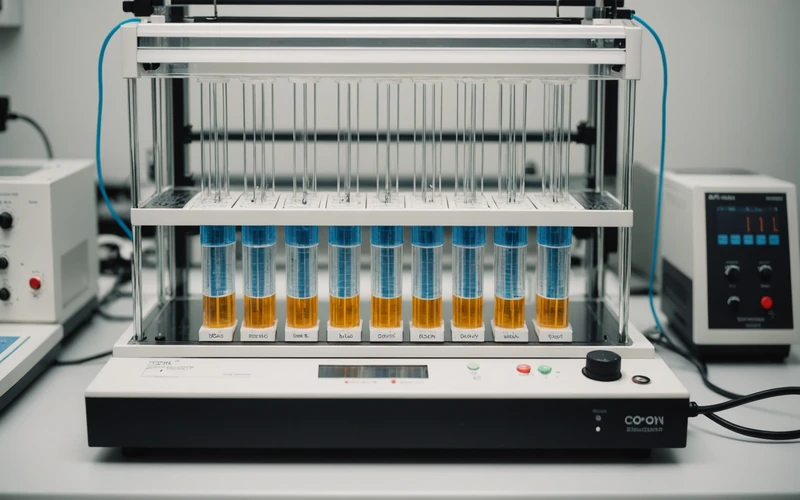
The framing we use internally is "don't optimize before you've characterized." Running eight parallel promoter-codon combinations in a 96-well microfermentation screen takes four weeks and gives you actual expression data across combinations rather than theoretical predictions. The literature consensus on promoter strength will tell you T7 gives higher yield, but it won't tell you that T7 gives higher yield of your specific payload at your target induction conditions with your specific codon-optimized sequence. Only a real screen does that.
Our recommendation for most early programs is a two-stage approach: start with a four-construct screen (T7 + Ptrc in BL21(DE3), plus T7 + Ptrc in a second host tailored to your payload type), get soluble/insoluble fraction data at 72 hours post-induction, and then commit to optimization of the top performer. Skipping the screen to save time usually costs more time, not less.